
İztuzu: a beach the turtles got to first
Four and a half kilometres of sand between the river mouth and the open sea, and a loggerhead nesting ground long before it was ever a beach. Everything about visiting it follows from that.
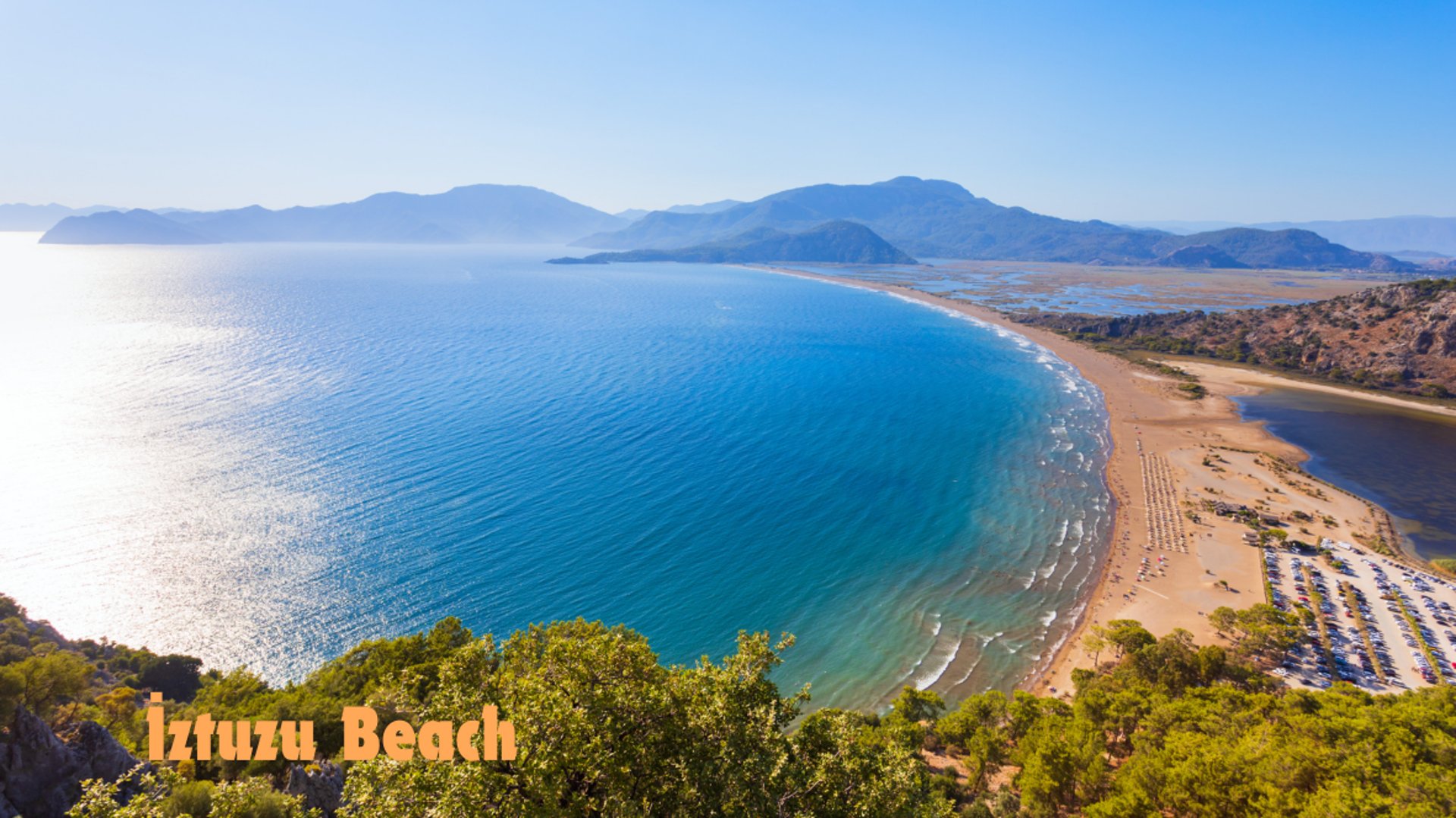
İztuzu is not a typical beach day. There are no hotels behind it, no bars along it, no rows of loungers stretching into the distance. The whole strip is protected, and what you get instead is sand, shallow water, the delta on one side and the Mediterranean on the other.
Go early or late. Bring everything with you. Stay off the marked nesting areas. The beach closes to visitors overnight during nesting season.
Getting there
| How | What it is like |
|---|---|
| By boat | Down the channel from town, past the rock tombs and through the reeds. Slower, and the better journey. Most river tours include it. |
| By road | Over the hill by car or dolmuş. Faster, and the only option if you want to be there at eight in the morning. |
If you only do it once, take the boat. If you want the beach before the crowds, drive. Which boat to take · car hire guide.
The turtles, and the rules
Loggerheads — Caretta caretta — have used this beach for a very long time, and the season has two halves that most guides run together.
| Phase | When | What is happening |
|---|---|---|
| Nesting | May to July, sometimes into August | Females come ashore at night to lay. Each one returns roughly every fifteen days and makes about three nests in a season. |
| Incubation | About 60 days per nest | The nests sit marked and cordoned above the tide line. Sand temperature during the middle third decides whether the hatchlings are male or female. |
| Hatching | July to October | Young turtles dig out and head for the water, navigating by the glimmer of the sea. |
So the month you come decides what you might see. June is adults coming ashore; September is hatchlings going the other way; August is often both at once.
Before any of that
The season starts offshore. Adults migrate to the breeding grounds and mate in April and May, males circling in the shallows near the beach while the females prepare to come in. By the time you see tracks in the sand, that part is already over.
The rules, and why they exist
- The beach closes to visitors overnight through the season, so females can come ashore undisturbed. The exact hour is posted at the entrance.
- Marked nests are off limits. No sitting, no umbrellas, no walking through them. The stakes and cages are not decoration.
- No torches, no flash, no phone lights after dark. Hatchlings find the sea by its faint glimmer — any stronger light source sends them the wrong way, inland, where they die.
- Keep the noise down near the marked areas.
None of this makes the beach less enjoyable. It is the reason there is still a beach worth going to.
The rest of a turtle's life
A loggerhead that hatches on this beach is at the beginning of something very long, and the beach is only the first few minutes of it.
| Stage | How long |
|---|---|
| Egg | About two months in the sand |
| Surface drift | Roughly two weeks, unable to dive |
| The lost years | 25 to 30 years to reach maturity |
| Return | Females come back to the beach where they hatched |
The last line is the part that makes the rules on this beach matter. A female nesting here this summer hatched on this same sand roughly three decades ago, found her way back across open sea, and will do it again every couple of years for the rest of her life. Lose the beach and you do not lose one season — you lose everything that would have come back to it for the next fifty years.
Temperature decides sex
Sea turtles have no sex chromosomes. What a hatchling becomes is decided by the temperature of the sand during the middle third of incubation — roughly days 20 to 40 of the two months.
| Sand temperature | Result |
|---|---|
| Around 26°C | All male |
| Around 29°C | Roughly half and half |
| Around 32°C | All female |
Which is why a warming coastline is not an abstract problem for this species. Hotter sand does not just stress the nests — it skews an entire generation female. It is also why conservation work now includes shading nests and, where a nest is going to be flooded or cooked, moving it.
DEKAMER
At the far end of the beach is DEKAMER, the sea turtle research and rehabilitation centre, founded with the help of Dr June Haimoff — Kaptan June to everyone here.
Injured turtles are treated here and you can see them recovering in the tanks. The injuries are almost always human: propeller strikes from speedboats, hooks and line from longline fishing, entanglement in discarded nets, and the effects of swallowing plastic. The staff will tell you what happened to each animal, which lands harder than any information board.
It takes twenty minutes and it changes how the rest of the day feels.
The story of how the beach was saved in the first place is a separate one, and worth reading.
Watching hatchlings
From July onwards the nests start to open and the young turtles dig their way out, usually at night, and head down the sand towards the faint light off the water. It is small and slow and unexpectedly moving.
Reaching the sea is not the end of it. For about the first fortnight a hatchling still carries a yolk reserve in its abdomen and physically cannot dive, so it drifts on the surface where birds and fish take most of them. The ones that get through spend the next twenty-five to thirty years somewhere in the open sea — a period researchers call the lost years, because nobody really knows where they go.
Only a fraction make it to adulthood. Watching them go is a reminder of why the rules on this beach exist at all.
There is almost nothing there
Two seasonal cafés and toilets at either end, and that is the whole of it. No shops, no sunbed hawkers, no shade beyond what you bring.
So: water, sunscreen, a hat, something to sit on, and snacks if you are staying the day. And take your rubbish back with you — there is nobody clearing the sand behind you.
Making the most of the day
- Walk away from where the boats arrive. Ten minutes in either direction and it empties out.
- The water is shallow a long way out, which makes it good with small children.
- Early morning and late afternoon are the hours. Midday sun here is serious and there is nowhere to hide from it.
- Kayaks and paddleboards can be rented in season if you want the coastline from the water.
Some links on this page are affiliate links. If you book through them we earn a commission at no extra cost to you. It does not change what we recommend.