
How to plan a trip to Dalyan, without the stress
Dalyan does not shout. It is quiet boat rides, slow dinners by the river, and tea that arrives without you asking. Here is everything worth knowing before you come.
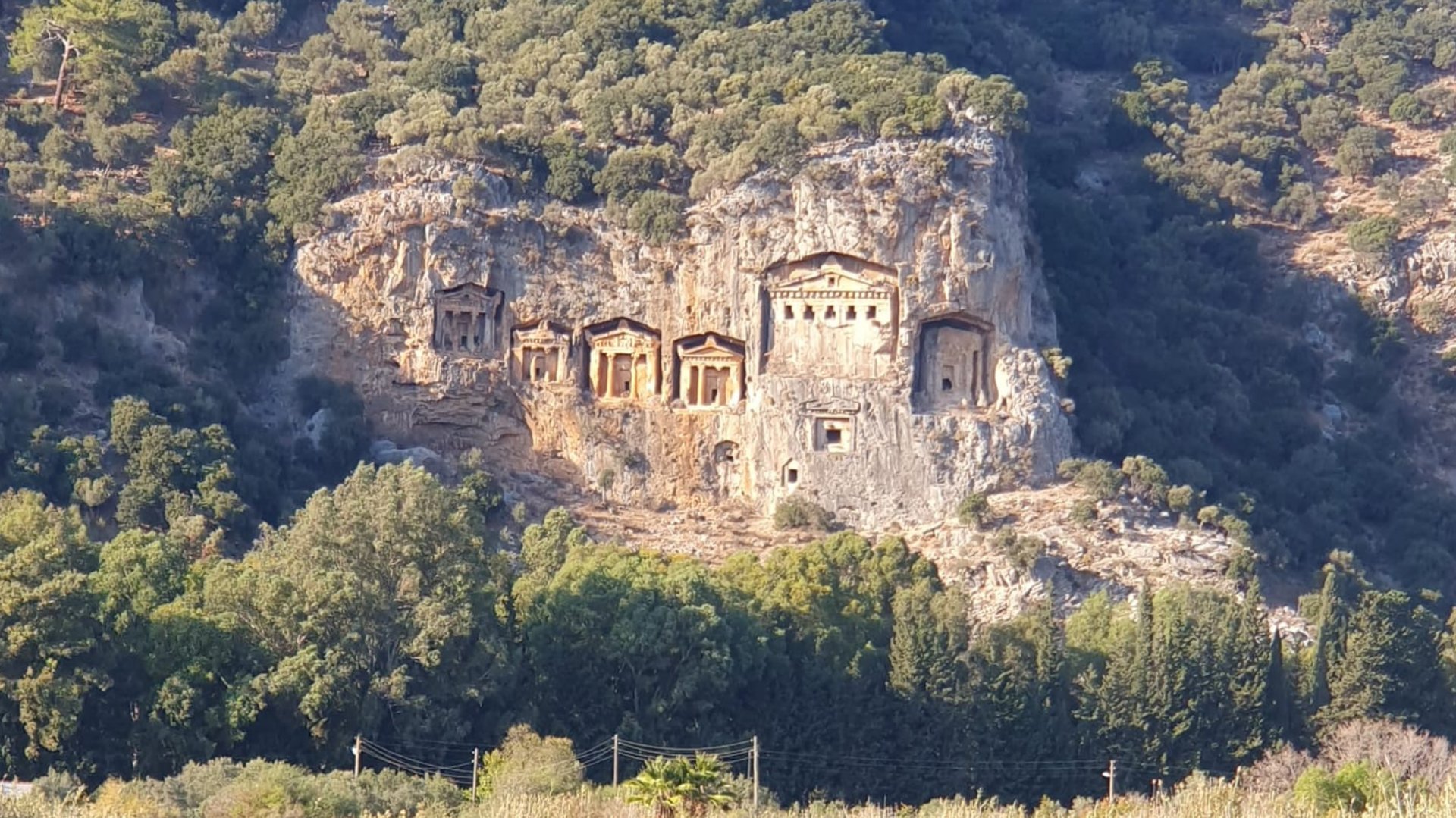
I came here for a weekend. I am still here, which tells you most of what you need to know about the place.
When to come
| Months | What it is like |
|---|---|
| May–June | Mild, green, and the orange blossom is out. Fewer people, lower prices. The best time for walking. |
| July–August | Hot — often 35–40°C — and busy. Lovely, but plan around the middle of the day. |
| September–early October | My favourite. Warm sea, golden light, and just enough people to keep the restaurants open and lively. |
| November–April | Off season. Quiet streets, moody skies, many places closed. Peaceful in a way the summer never is. |
If you can choose freely, come in late September. And if you come in May, the orange blossom is its own event — the whole town smells of it for a few weeks.
Getting here
One flight and one short drive. Dalaman airport is about 30 minutes by car. A shared minibus takes longer, because it drops other passengers first.
- Pre-booked transfer — the easy answer for a late arrival, and most UK flights land late. Transfer guide.
- Hire car — worth it from about two days of exploring onwards. Whether you actually need one.
- Dolmuş — cheapest, but not a single ride: you change at Ortaca. Fine in daylight with light luggage.
- Airport taxi — there is a published fixed tariff, so no negotiating at the kerb.
That moment when you first see the river through the car window is when the holiday starts.
Where to stay
Dalyan is not a resort town. It is small hotels, family-run pansiyons and villas, and the decision that matters is not the star rating — it is which part of town you wake up in.
- Merkez — the channel front. Walk everywhere. Loudest at night.
- Maraş — riverside, facing the rock tombs. The terraces are the reason people come back.
- Gülpınar — gardens and proper pools, still walkable into town.
- Metinler — villas with their own pool. You will want a car.
Full area guide, including what each one is actually like at night.
Getting online
For a week or two: an eSIM
Install it before you fly and you land connected, which saves queueing at the airport with everyone else off your flight. One thing worth knowing: some travel eSIMs route your data as roaming through a network abroad, and in Turkey that kind of connection can be cut short — occasionally after ten days or so, with data still left on your account. Buy from a provider that works properly here rather than the cheapest one you find.
YesimWhat I link to first. Straightforward data packages, works for a normal week here.
Check plans →AiraloThe name most people have already heard of. If you want the familiar option, take this one.
Check plans →DrimsimBalance-based rather than packages, and works across countries. Checks your phone is compatible before you buy. Better if Turkey is one stop of several, or you are staying a while.
Check plans →All three are affiliate links and I should be straight about it: they do not pay the same. The order above is what I would actually recommend, not what pays most — but if that bothers you, any of the three will get you online.
Staying longer? A Turkish plan starts to make sense
Past a few weeks, a local package is cheaper per gigabyte and gets you a Turkish number. Working out which one suits you is the hard part, because the advertised price is rarely what you end up paying over a year.
I built a comparison tool for exactly this. It takes your usage and budget and works out the real 12- and 24-month cost of each operator's package, including the parts that are not in the headline. It is in Turkish at the moment, and I am putting together an English version for visitors.
Thank you — I will email you once it is up.
The IMEI rule, since people worry about it
A foreign phone can be used on a Turkish SIM for 120 days from the date you entered the country. After that it has to be registered with BTK, and registration in 2026 costs ₺54,258 — a figure aimed at residents rather than visitors, and one most tourists cannot pay anyway without a Turkish ID.
For a holiday this is irrelevant, and a travel eSIM sits outside it in practice. If you are planning to stay past four months, read up properly before buying a local SIM.
Paying for things
Cards work in hotels, most restaurants and the bigger shops. Cash is easier everywhere else — the market, small cafes, the boat, the dolmuş, the crossing to Kaunos.
- Bring small notes. Nobody at the market wants to break a large one at eight in the morning.
- Withdraw from a bank ATM rather than an independent machine in a tourist area, and decline the conversion when it offers to charge you in pounds.
- Prices move. Turkey's inflation means anything you read online from last year is out of date, including on this site. I have deliberately not put fixed prices on these pages for that reason.
What to pack
- Light cotton or linen. Summer here is genuinely hot and humid near the water.
- Sunscreen and a hat. There is very little shade at İztuzu or at Kaunos.
- Shoes with grip if you are going up to the ruins. The ground is uneven stone.
- A light layer for evenings — it cools down by the river, especially in spring and autumn.
- Something you do not mind ruining if the mud baths are on your list. The grey does not always wash out.
- Insect repellent. It is a delta. There are mosquitoes at dusk.
What is actually worth doing
- Take a boat through the reeds to İztuzu. The thing everyone remembers. Which boat to take.
- Cross the river and climb to Kaunos. Go before nine. Kaunos guide.
- The mud baths. Undignified, and everybody enjoys them.
- Dinner by the river at sunset. Book the table earlier in the day in high season. Where to eat.
- The Saturday market. Early. Market guide.
- Yuvarlakçay, if you have a car and a second day. Places worth the day.
Small things
Google Maps works fine here, but screenshot anything off-road before you set out. Basic Turkish is appreciated and not necessary — most people working with visitors speak some English, and everyone is patient about it.
And say yes to the last glass of tea. It is not really about the tea.
One last thing
Dalyan is not a place you tick off. It is a place that slows you down, and the people who love it are usually the ones who did not plan every hour of it.
Leave a day with nothing in it. That is normally the day people describe when they get home.
Some links on this page are affiliate links. If you book through them I earn a commission at no extra cost to you. It does not change what I recommend — including the parts above where I tell you that you might not need a car, or that the dolmuş would do.