
Everything else that lives here
The turtles get the attention, and fairly. But the delta between the lake and the sea is one of the richest bits of wetland on this coast, and most visitors float straight through it without looking up.
Dalyan sits in the middle of a system: a lake at one end, the sea at the other, and between them a maze of reed channels, brackish water and mudflats. That is unusual habitat, and it is why so much lives here.
Birds — the part nobody mentions
If you like birds, this is the reason to come. Take the boat and sit at the back, or better, walk the edges of the channels early in the morning.
Resident
Grey herons standing motionless in the shallows. Little egrets, bright white against the reeds. Kingfishers, which you usually hear before you see — then a blue line going past at speed. Cormorants drying their wings on the posts.
On passage
Spring and autumn bring migration through the delta. Flamingos on the shallow water, pelicans, storks, and raptors overhead using the thermals off the hills. It changes week to week, which is half the appeal.
The delta and the wetland edges near Köyceğiz lake, early morning or the last hour before sunset. Bring binoculars — almost nobody does, and the boats go close enough that they are worth carrying.
The turtles
Loggerheads — Caretta caretta — nest on İztuzu at the mouth of the river. The cycle runs like this:
| When | What happens |
|---|---|
| April–May | Adults migrate to the breeding grounds and mate offshore. |
| May–July, sometimes August | Females come ashore at night, roughly every fifteen days, about three nests each. |
| ~2 months later | Incubation. Sand temperature in the middle third decides sex. |
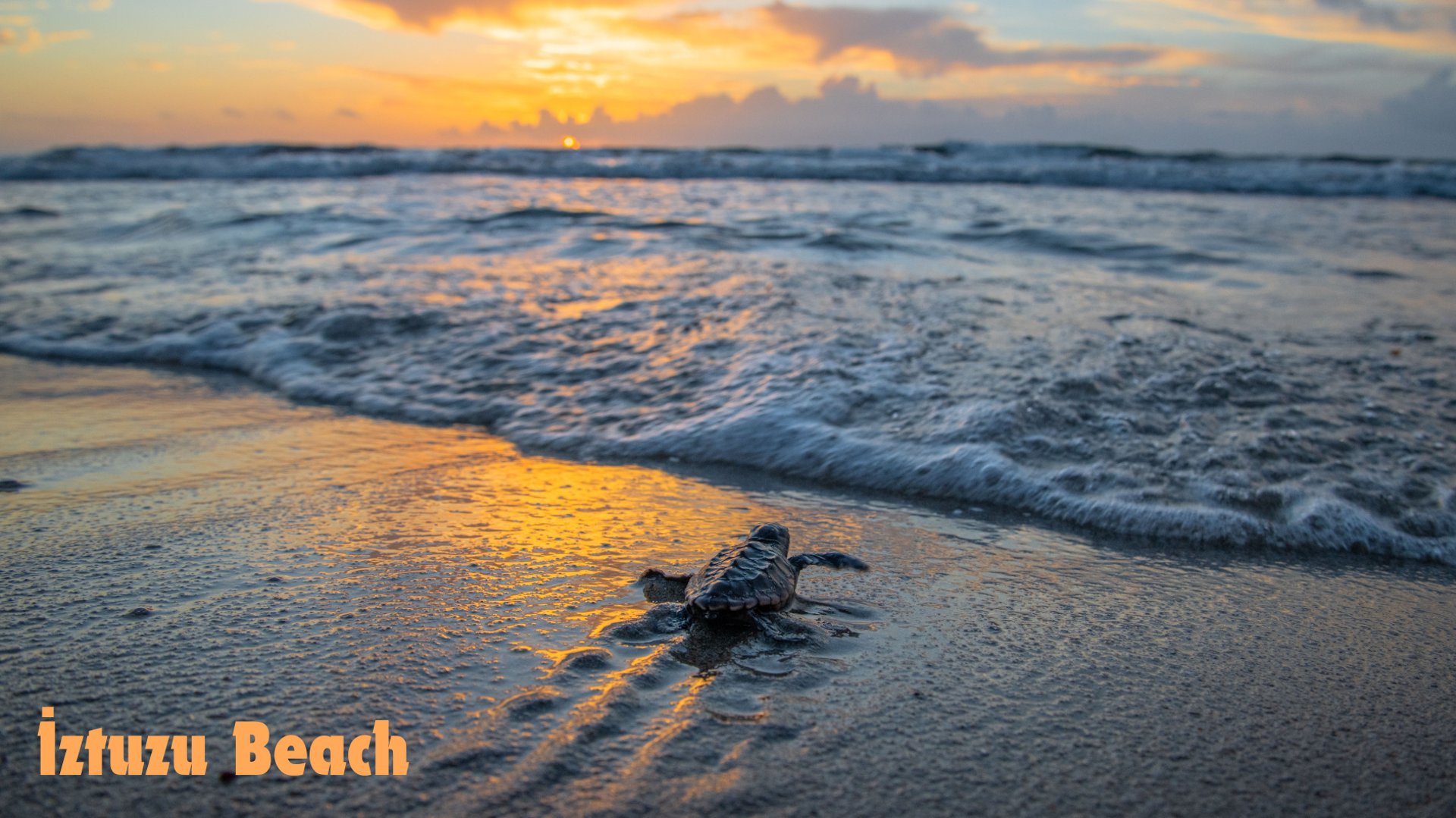
| July–October | Hatchlings dig out and head for the water. |
| 25–30 years | Time to sexual maturity. Females then return to the beach where they hatched. |
No sex chromosomes. Whether a hatchling is male or female is set by sand temperature during roughly days 20 to 40 of incubation: about 26°C gives all males, 32°C all females, 29°C an even split. A warming coast does not just stress nests — it can skew a whole generation one way.
Diet changes with age. Hatchlings feed on plankton and whatever small insects land on the surface. Adult loggerheads are carnivorous — crabs, molluscs, fish, jellyfish — which is precisely why a floating plastic bag is lethal to them. Green turtles, the other Mediterranean species, go the other way and turn herbivorous.
They travel further than you would think. Satellite tracking has followed individuals across the Mediterranean; one female tagged in Italy turned up off Bodrum. The turtle surfacing next to your boat on the Dalyan river may have spent the winter a very long way from here.
You will sometimes see one surfacing in the river near the boats, which is a strange and excellent thing to witness from a few metres away. Adults are large — well over 100kg — and long-lived, and the ones in the river are usually there for the same reason as everyone else, which is the fish.
What kills them: longline and trawl fishing, ghost nets left in the water, boat strikes, disease and pollution. The rehabilitation centre at the beach treats the survivors of exactly this list.
The full picture — nesting rules, DEKAMER, hatchlings — is on the İztuzu beach guide.
In and around the water
Terrapins. Balkan terrapins are common in the river and the channels, usually spotted as a head cutting a small V through the surface.
Fish. The delta has been a working fishery for a very long time — sea bass, mullet, eel. The blue crab, which ends up on restaurant tables in town, is caught in the same water.
Frogs. You will hear them at night if you stay anywhere out towards the fields. It is louder than you expect and oddly pleasant.
On land
Lizards everywhere in summer, on every warm wall. Foxes and wild boar in the hills behind the town, mostly at night and mostly heard rather than seen. Butterflies through the meadows in spring, and bees all over the orange blossom in May — the smell of which is its own event.
How to actually see any of it
Go early. Almost everything here is active in the first two hours of daylight and the last hour before dark, and almost nothing is active at two in the afternoon.
Be quiet, and stop moving. A boat that idles for five minutes near the reeds will show you more than one that motors through for an hour.
Leaving it as you found it
- Stay off marked nesting areas on the beach, and stay on paths in the wetlands.
- Take your rubbish with you. Plastic in this system ends up inside something.
- Do not feed anything, including the terrapins, however much they appear to be asking.
- Support the people doing the work — DEKAMER at İztuzu takes donations and runs on very little.