
The beach that was nearly a hotel
In the late 1980s there were plans to develop İztuzu. There is no hotel there today because a retired Englishwoman and a lot of local people refused to let it happen.
Getting there, the nesting rules and what to bring are in the İztuzu beach guide. This page is the story behind it.
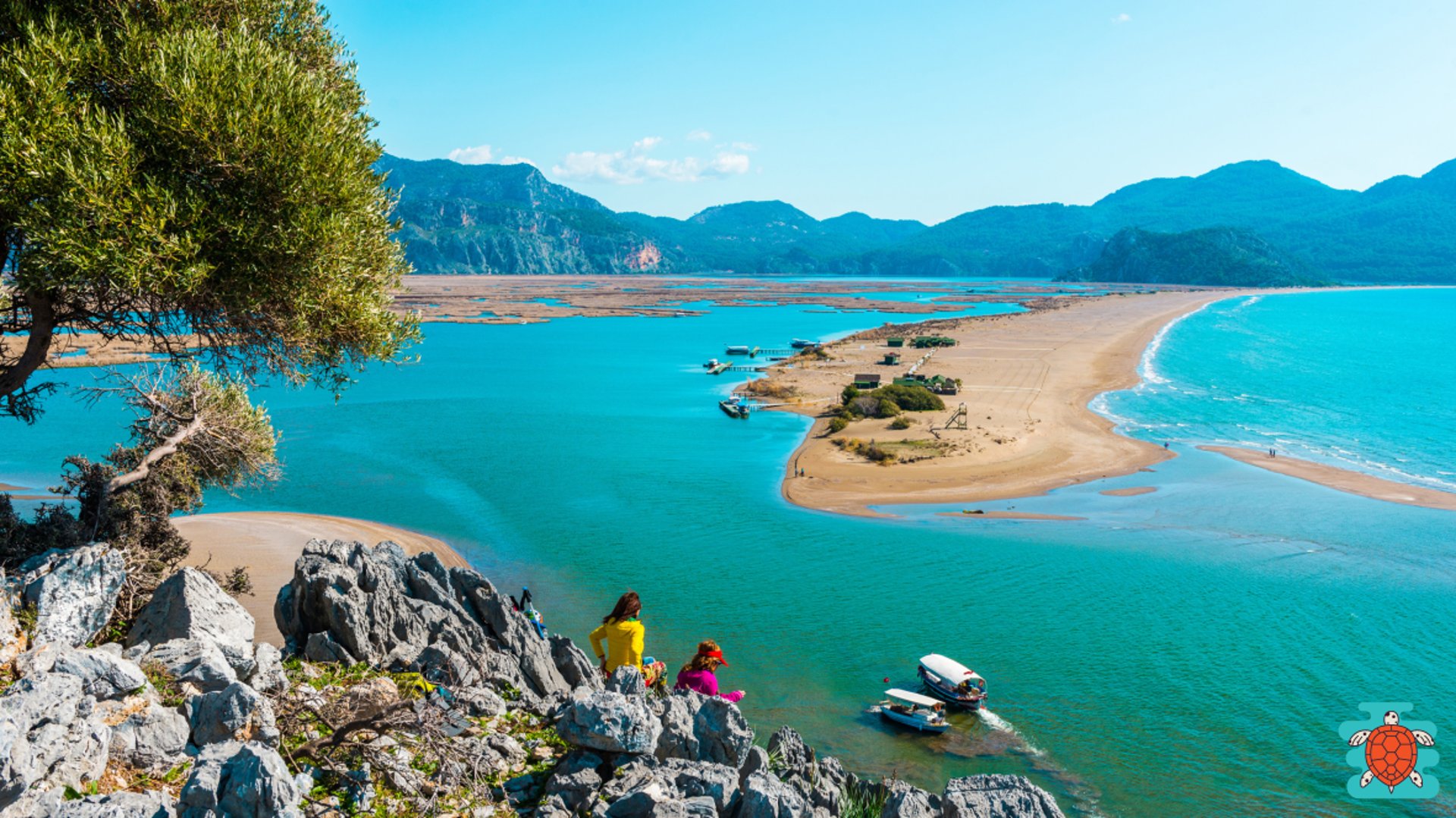
Stand on İztuzu now and the absence is the striking thing. Four and a half kilometres of sand with nothing built on it — no hotel block, no beach club, no line of concrete along the back. On this coast, in this decade, that is close to impossible.
It very nearly was not the case.
What was planned
In the second half of the 1980s the beach and the land behind it were lined up for development — a large hotel project of the kind that was going up all along the Turkish coast at the time. Tourism was expanding fast, and a long empty beach next to an airport was exactly the sort of thing that got built on.
Kaptan June
Dr June Haimoff arrived in Dalyan from England in the 1980s, moored her boat, and stayed. She lived in a wooden hut on the beach, and she came to know it in the way you only can by being there every day — including in the summer nights, when the loggerheads come ashore.
When the development plans surfaced she began a campaign against them, and she was persistent in a way that turned out to matter. She wrote to anyone who might listen, gathered support locally, and pulled in conservation organisations abroad.
Why it worked
The campaign succeeded because it was not only hers. Local people, Turkish conservationists and international bodies pushed together, and the argument had a specific, defensible core: this was one of the few remaining loggerhead nesting beaches in the Mediterranean, and building on it would end that.
The beach was given protected status. The hotel was never built. The land behind the sand stayed as it was.
What that decision bought
Every summer since, the turtles have come back to the same stretch of sand. And they come back for a specific reason: a female loggerhead returns to the beach where she hatched, which is somewhere between twenty-five and thirty years earlier.
So the turtles nesting on İztuzu right now hatched on this sand around the time the campaign was being fought. If the hotel had gone up, they would have had nowhere to return to — and neither would anything hatching today.
None of that would exist behind a hotel. The reason İztuzu still works as a nesting ground is that somebody stopped the building forty years ago.
Kaptan June's legacy
She stayed in Dalyan for the rest of her life and became part of the town rather than a visitor to it. The Kaptan June Sea Turtle Conservation Foundation continues the work, and her name comes up constantly here — usually with affection rather than ceremony.
Her hut is still on the beach. It is a small thing to walk past, and it is the reason the rest of the beach looks the way it does.
Older than that
The sand itself has been here a great deal longer. Across the water is Kaunos, a port city founded around the tenth century BC, which traded from this delta until its harbour silted up. The tombs cut into the cliffs above the river belong to it. More on Kaunos.
So the beach has been in continuous view of human settlement for nearly three thousand years, and the closest it ever came to being lost was the 1980s.
What it means for visiting
The rules on the beach — the marked nests, the overnight closure, no lights after dark — are not bureaucratic leftovers. They are the terms on which the beach survived.
Following them costs nothing. Ignoring them undoes something that took a campaign to win.
The beach is still here because somebody was stubborn about it for long enough.