
Kaunos: the city the tombs belong to
Everyone photographs the rock tombs from the river. Fewer people cross the water and climb up to the city they were cut for, which is a mistake — the view from the acropolis explains the whole delta in one glance.
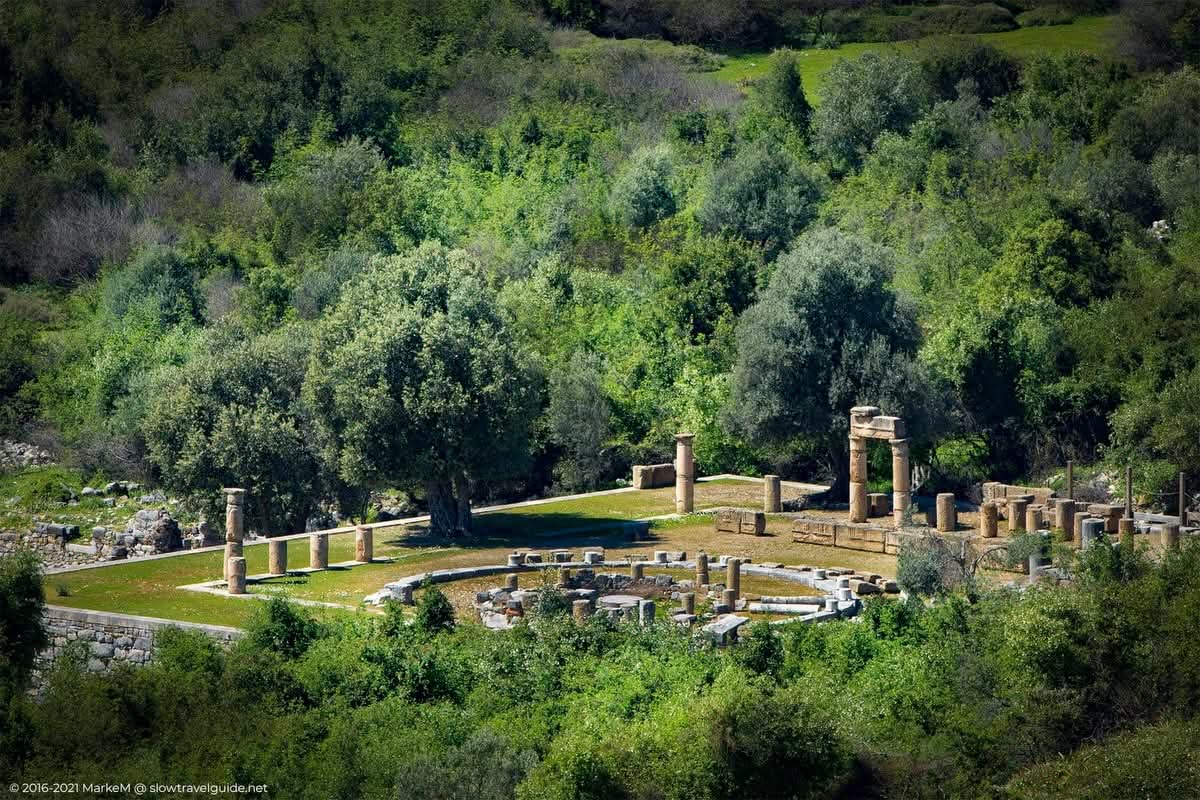
Cross by small boat from town, then about fifteen minutes uphill on uneven ground. Go early — there is almost no shade on the site. Proper shoes, water, a hat.
Getting there
Small boats cross the channel from Dalyan all day in season. It takes a few minutes and costs very little. From the landing it is a walk up to the ticket point and then the site.
The path is stone and uneven and steeper than it looks from the water. It is manageable for most people at a slow pace, but it is not a stroll, and it is considerably harder at midday in August.
Some private boat tours include Kaunos alongside the river circuit, which handles the crossing and the timing for you. Boat tour guide.
What is up there
The theatre
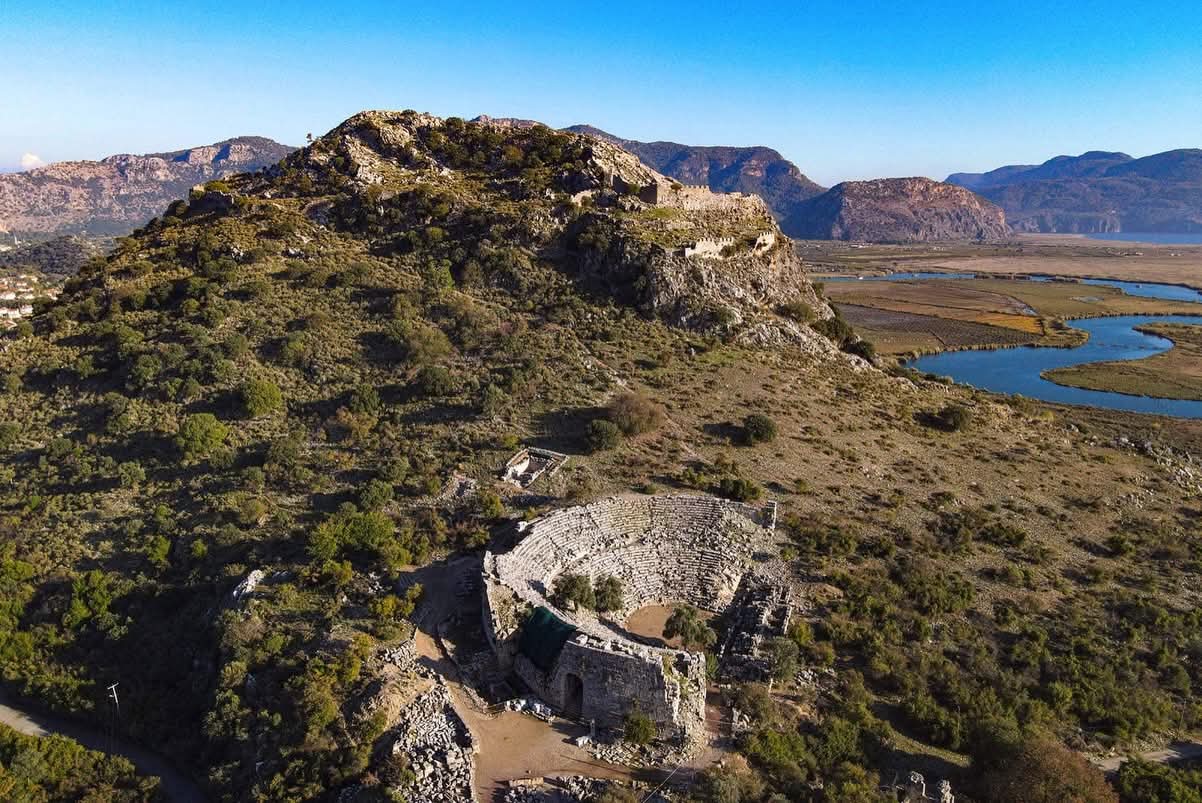
Cut into the hillside and still largely intact, with room for something like five thousand people. Climb to the top row and sit down for a minute — the acoustics still work, and the view out over the delta from the back of the seating is the best on the site.
The acropolis and walls
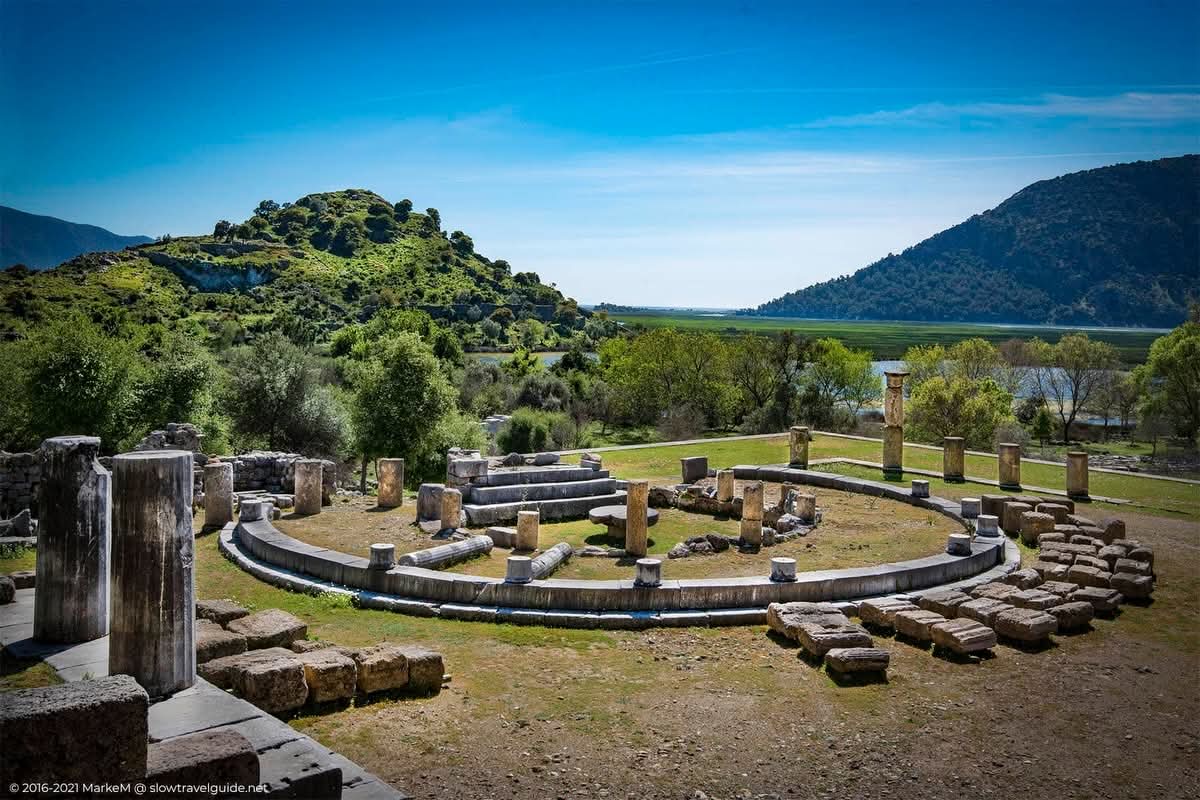
Above the theatre, the high point of the city and its fortress. Sections of the city walls are still standing along the ridge. The climb is the hardest part of the visit and the reward is the entire delta laid out below — river, reed beds, İztuzu and the sea beyond it.
The temples, agora and baths
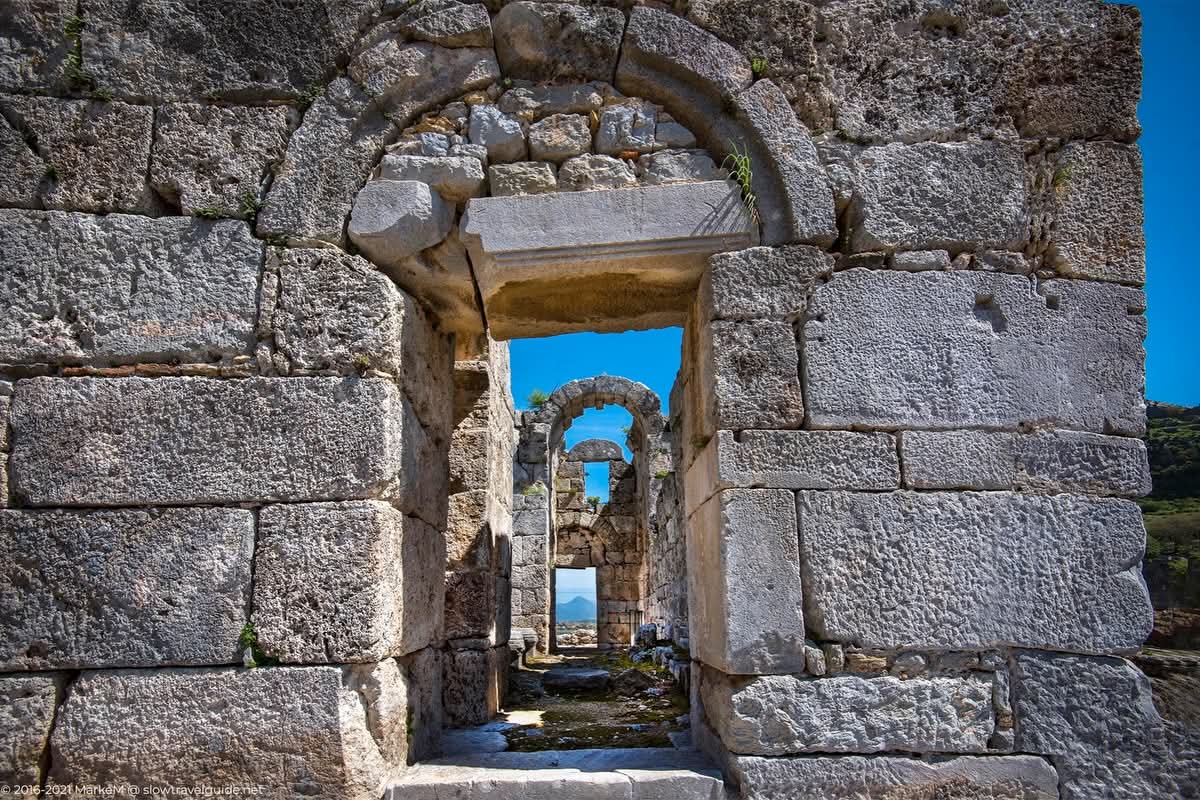
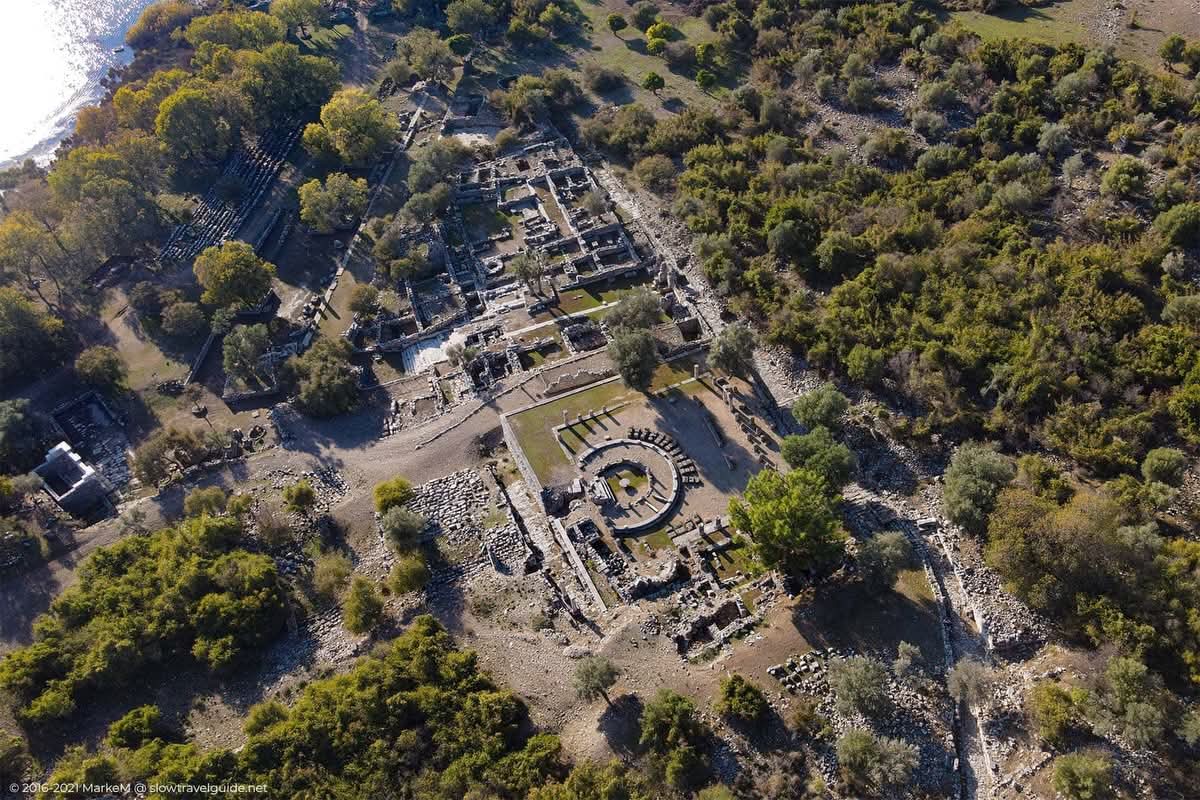
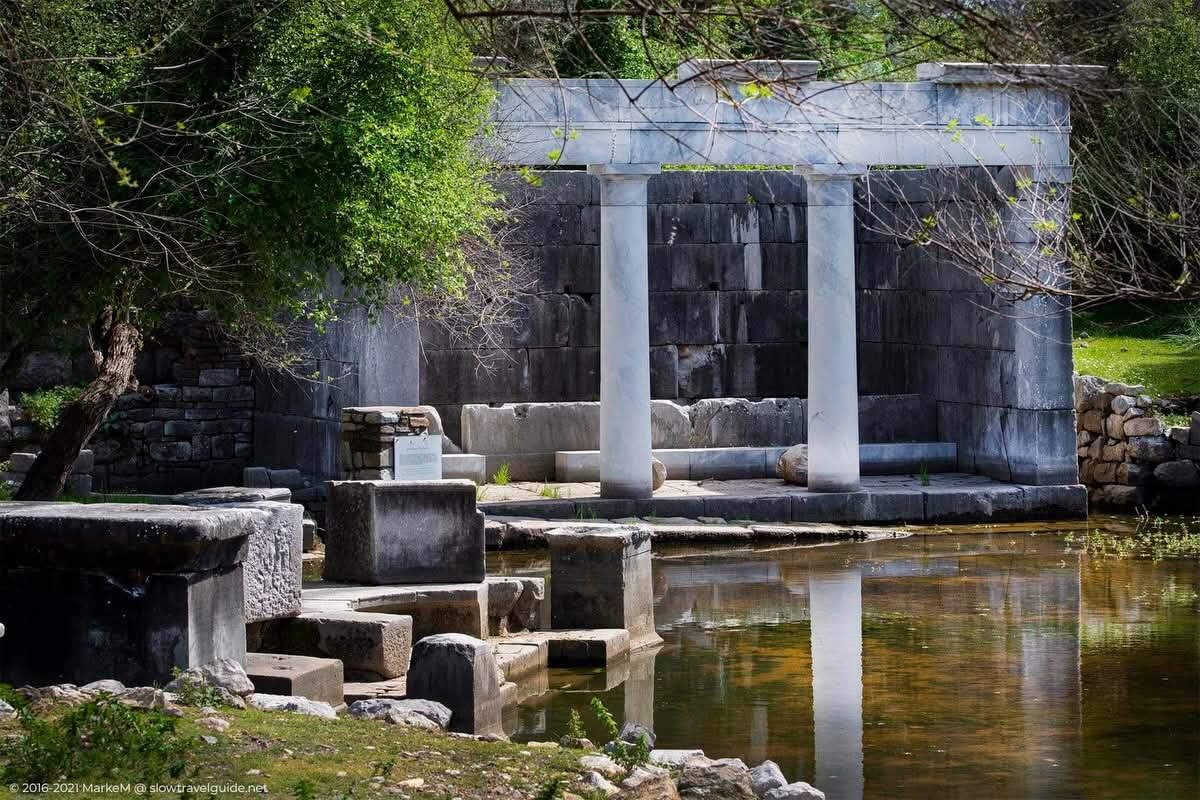
Between the theatre and the harbour end there are the remains of temples, the agora where the city's business was done, and Roman baths. Less dramatic than the theatre and worth the walk, because it is where you get a sense of Kaunos as a place people lived rather than a monument.
The rock tombs
The famous ones, cut into the cliff face and carved to look like temple fronts. These were for the city's elite. You see them best from the water — from the site itself you are largely above and behind them.
A short history
Kaunos was founded around the tenth century BC and worked as a port, sitting on the trade routes between the Aegean and the Mediterranean. Greek, Roman and Anatolian influences pile up on top of each other across the site, which is why the architecture does not settle into one style.
It declined for an unglamorous reason: the harbour silted up. The delta that makes the landscape so striking today is the same process that slowly cut the city off from the sea and ended its usefulness as a port. The water you cross to get here is what closed it down.
Kaunos and Byblis
The legend attached to the city is a tragedy. Kaunos, its founder, was loved by his sister Byblis. When she told him, he fled, and founded the city that took his name. She followed, and died of grief on the way.
Ask a boat captain about it. Most of them tell it better than any guidebook, and they have had a long time to practise.
When to go
| Time | What it is like |
|---|---|
| Early morning | Cool, empty, and the light on the stone is at its best. The correct answer. |
| Late afternoon | Also good, though the climb is warmer and you are working against closing time. |
| Midday in summer | Hot, exposed and busy with tour groups. Avoid if you can. |
What to bring
- Shoes with grip. The ground is uneven stone throughout.
- More water than you think. There is nowhere to buy any on the site.
- Hat and sunscreen. Shade is close to non-existent.
- Cash for the boat and the entrance.
Afterwards
Come back across the river hungry. A late Turkish breakfast or a plate of meze by the water is the correct end to a morning at Kaunos — where to eat.
Private boat trips including Kaunos →
Some links on this page are affiliate links. If you book through them we earn a commission at no extra cost to you. It does not change what we recommend.